SD Card
… visits


Note: The SD module of TFT & EPD Graphic Library 2 can be used as a standalone include in your own projects.
However, initial pin and include setup must still be done through the included TFT_Graphic_Lib.exe for correct configuration.
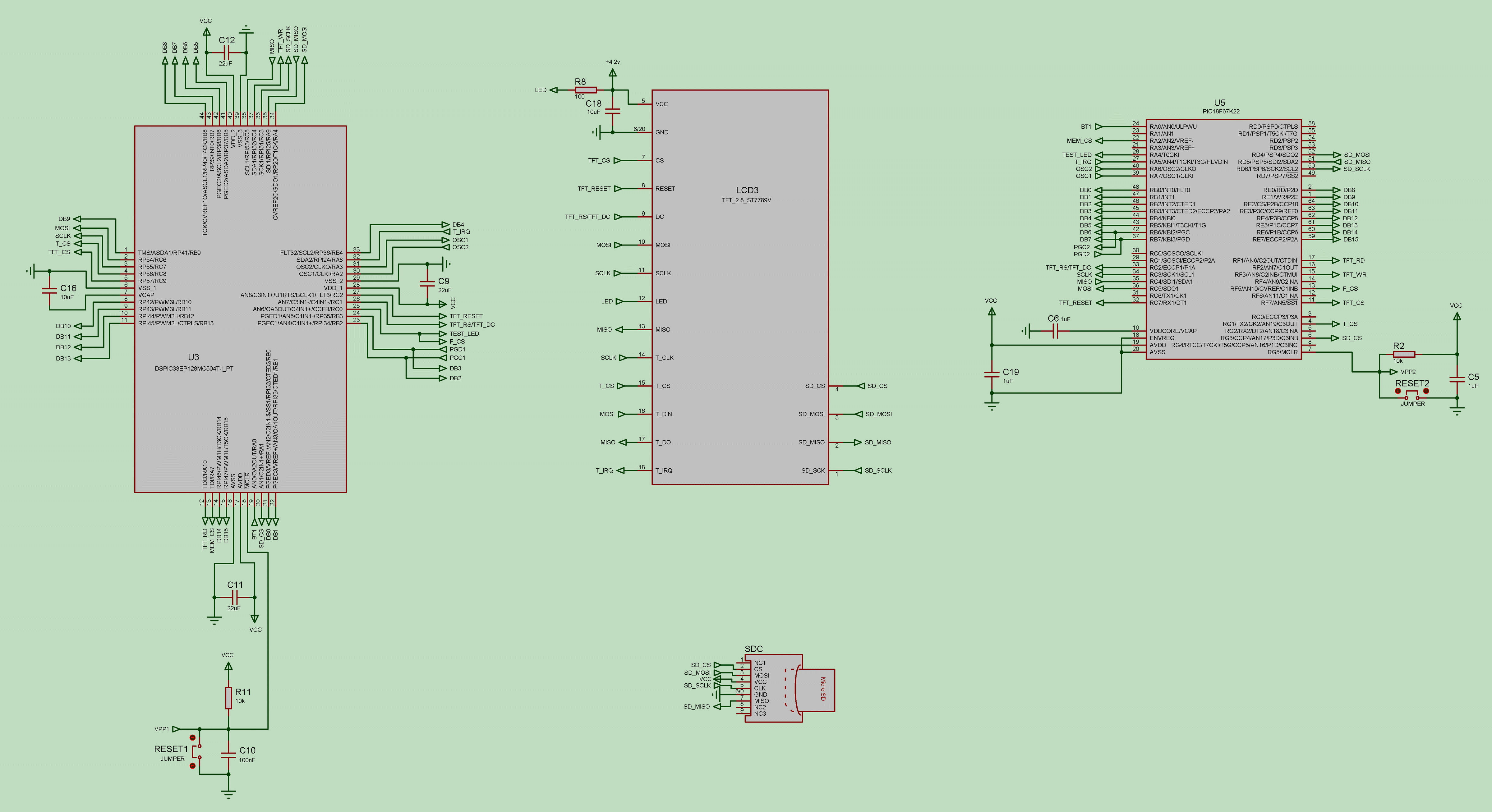
Many TFT modules include an SD card slot with its own dedicated SPI interface. If your module does not include one, you can add an SD card slot to your hardware design.
The SD interface on TFT modules operates independently from the display controller and uses separate SPI pins.
For best performance and reduced complexity, it is recommended to use a dedicated hardware SPI bus - ideally a secondary SPI module that is not shared with the TFT display.
Sharing an SPI bus with the TFT does not significantly affect SD card read/write performance, however any simultaneous data transfers between the TFT and the SD card will greatly reduce throughput.
Software SPI can also be used, with the best performance achieved when the SD card is placed on its own SPI lines.
Sharing signal lines with the TFT has only minor impact on SD card performance but causes a major slowdown for the TFT when both are accessed concurrently.
Recommended design: Use separate SPI lines, hardware or software, for the SD card and external memory, independent from the TFT module’s SPI interface.
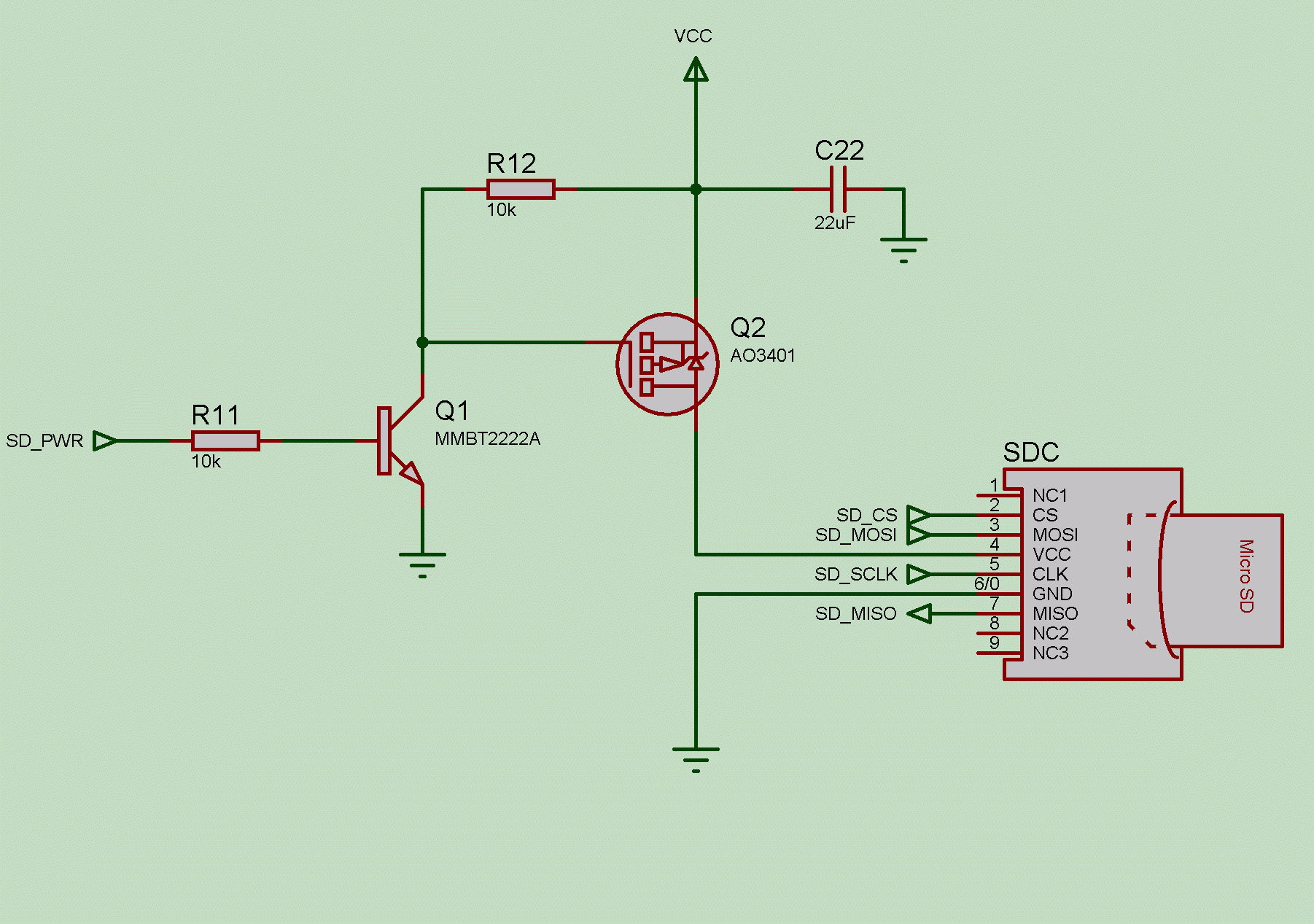
It is also advisable to include a power control switch for the SD card so it can be reset or powered down when not in use. This allows you to reinitialize the SD card cleanly if required.
SD cards can draw substantial current during operation, so ensure proper decoupling and provide at least 200 mA of peak current capability.
|
$define SD_COM SPI_SW or $define SD_COM SPI_1 or $define SD_COM SPI_2 |
Created with the Personal Edition of HelpNDoc: Free EBook and documentation generator