EPD
… visits


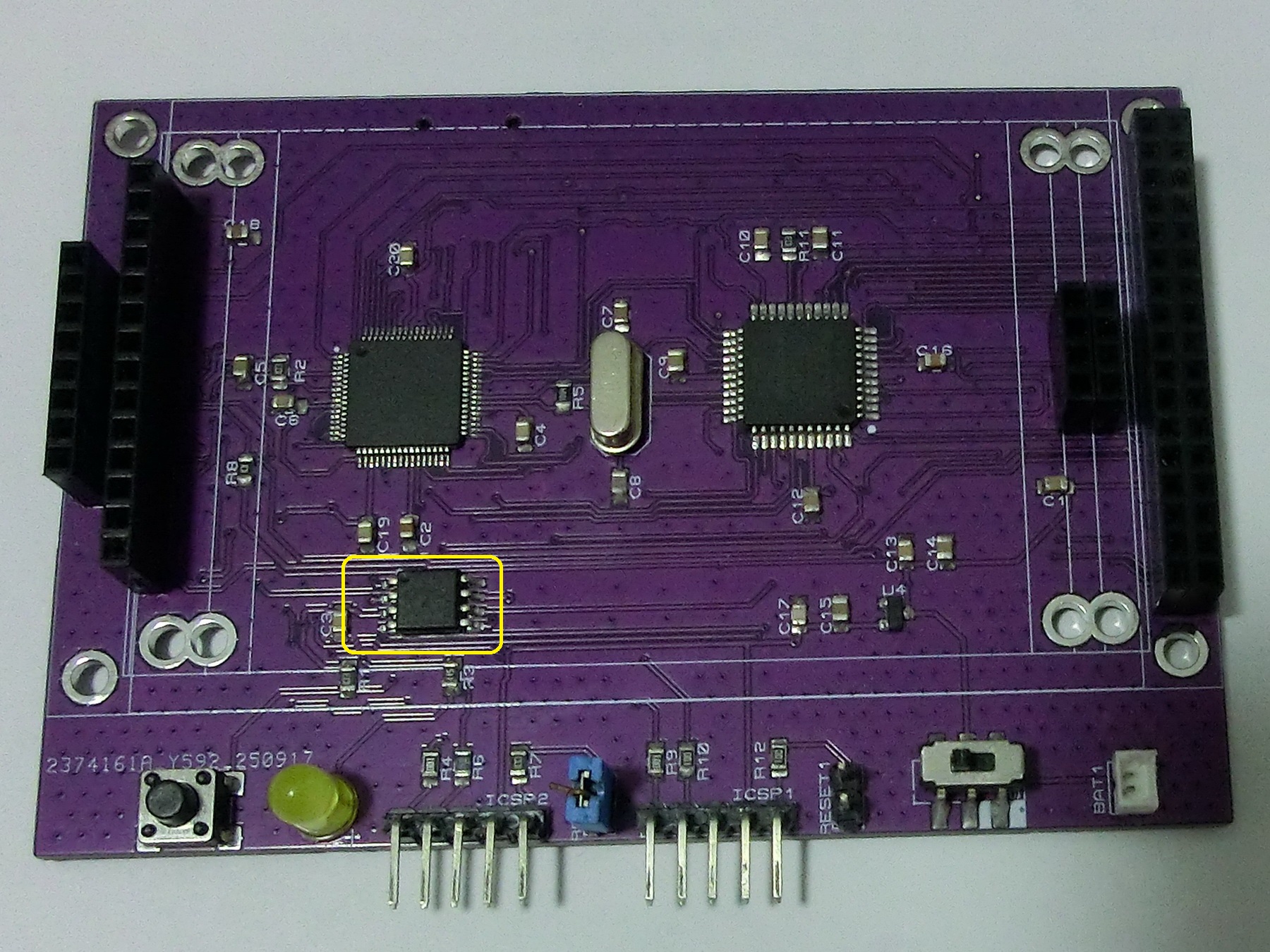
Why might we want to include external memory in our design?
External memory extends what a small MCU's limited internal flash and RAM can hold, and is useful anywhere your application needs more image data or buffer space than fits on-chip.
Two common uses:
Storing image data. Compressed HEX tables or raw BMP files that the system needs to display can be held in external memory rather than internal flash — useful when the number or size of images would otherwise exceed what the MCU's own flash can hold.
This is especially relevant if the application offers a choice of several different screens to display, whether shown as a single full-frame image or assembled from multiple smaller elements — inserting compressed HEX tables or BMPs (via this library's built-in BMP-to-B&W conversion commands) into the frame buffer at the appropriate positions before sending it to the display.
Storing frame buffer captures. A complete frame buffer can be saved to external memory and recalled later for display — useful for restoring a previous screen without regenerating it from scratch, since (as covered earlier) the EPD controller's own RAM does not survive power-down.
External Flash Command Set:
The library communicates with external memory using Microchip's standard SPI FLASH command set, with 24-bit (3-byte) addressing — a command structure widely shared by other manufacturers' SPI FLASH parts as well, so most common external FLASH chips should work without modification.
If your chosen memory device uses a different command set or addressing width, the library's memory-access routines can be adapted on request.
Created with the Personal Edition of HelpNDoc: Powerful and User-Friendly Help Authoring Tool for Markdown Documents